⚓ The Strait of Hormuz Blockade: Why the Adhesive Industry is "Stuck" in a Crisis
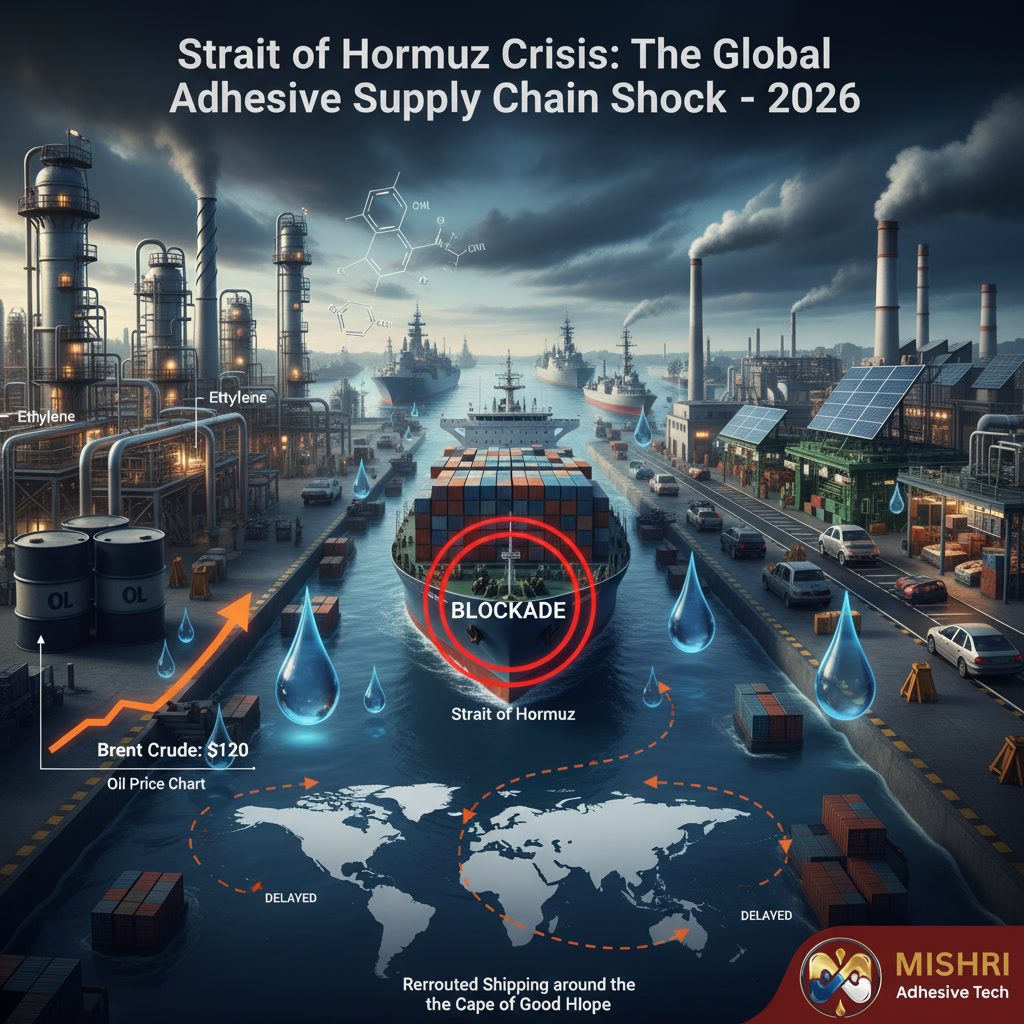
As of April 2026, the blockade in the Strait of Hormuz has evolved from a regional geopolitical tension into a global manufacturing emergency. With Brent Crude Oil surging beyond $118 per barrel and critical chemical feedstocks stranded, the "liquid oil" that powers modern manufacturing—adhesives—is facing an unprecedented supply challenge.
The impact extends across industries including electronics, solar energy, automotive manufacturing, packaging, and construction. Rising raw material costs, extended lead times, and supply chain disruptions are forcing manufacturers to rethink sourcing strategies and inventory management.
⚓ The Strait of Hormuz & The Sticky Reality of 2026
If you manufacture electronics, solar modules, automotive components, or industrial products, you are not simply buying adhesives—you are purchasing materials derived from petrochemical feedstocks closely tied to global energy markets.
With Brent Crude approaching $120 per barrel and the Strait of Hormuz effectively closed since March 2026, the adhesive industry is experiencing significant pressure on both supply availability and pricing.
📉 1. The Naphtha Shockwave
The Gulf region supplies approximately 60% of Asia's naphtha imports, making it a critical source for petrochemical production.
As supplies remain constrained, the industry is witnessing a cascading impact throughout the value chain:
- Feedstock Scarcity: Prices of Ethylene and Propylene, the primary building blocks of modern polymers, have surged dramatically.
- Reduced Production Capacity: Several petrochemical facilities across Asia have lowered operating rates due to feedstock shortages.
- Raw Material Inflation: Manufacturers are facing substantial increases in raw material costs and supply uncertainty.
🚢 2. The War-Risk Logistics Tax
The challenge extends beyond raw materials. Logistics and transportation costs have become a major contributor to overall product pricing.
- Longer Shipping Routes: Many vessels are avoiding the Persian Gulf, adding significant transit time by rerouting through alternative maritime corridors.
- Higher Insurance Costs: War-risk premiums for cargo shipments have increased substantially, adding considerable costs to global trade operations.
- Extended Lead Times: Manufacturers are experiencing delays in receiving critical raw materials and finished goods.
These additional logistics costs are ultimately reflected throughout the manufacturing supply chain.
🛠️ 3. The Shift Toward a Hormuz-Independent Strategy
Building resilience in 2026 requires more than short-term procurement adjustments. Industry leaders are implementing structural changes to reduce dependence on high-risk supply routes.
Regionalized Supply Chains
Companies are increasingly sourcing raw materials from North America, Europe, and regional suppliers to diversify feedstock availability and reduce geopolitical exposure.
Bio-Based Adhesives
The adoption of bio-derived tackifiers, renewable resins, and sustainable adhesive technologies is accelerating. These solutions are no longer viewed solely as environmental alternatives but as strategic supply chain assets.
Predictive Inventory Management
Manufacturers are transitioning from traditional Just-in-Time models toward more resilient inventory strategies supported by AI-driven forecasting and supply chain monitoring tools.
💡 Key Takeaways for Industry Leaders
The Strait of Hormuz blockade highlights the critical role adhesives play within the global manufacturing ecosystem. As energy markets become more volatile, companies must prioritize supply chain resilience, sourcing diversification, and formulation flexibility.
In the current environment, competitive advantage will increasingly depend on a company's ability to adapt quickly to changing raw material dynamics rather than solely focusing on procurement costs.
Looking Ahead
The adhesive industry continues to evolve in response to geopolitical, economic, and environmental pressures. Organizations that invest in diversified sourcing strategies, sustainable chemistry, and advanced supply chain planning will be better positioned to navigate future disruptions.
"In today's market, resilience is becoming just as important as cost. The future belongs to manufacturers with the most adaptable chemistry and the most flexible supply chains."
Conclusion
The Strait of Hormuz situation serves as a reminder of how interconnected global manufacturing has become. For adhesive manufacturers, distributors, and industrial users, proactive planning and strategic diversification are no longer optional—they are essential components of long-term business stability.
Companies that respond quickly to these market shifts will be best positioned to manage risk, maintain supply continuity, and protect profitability in an increasingly uncertain global environment.